Professor Everywhere (Proverse Prize Publications) by Nicholas Binge
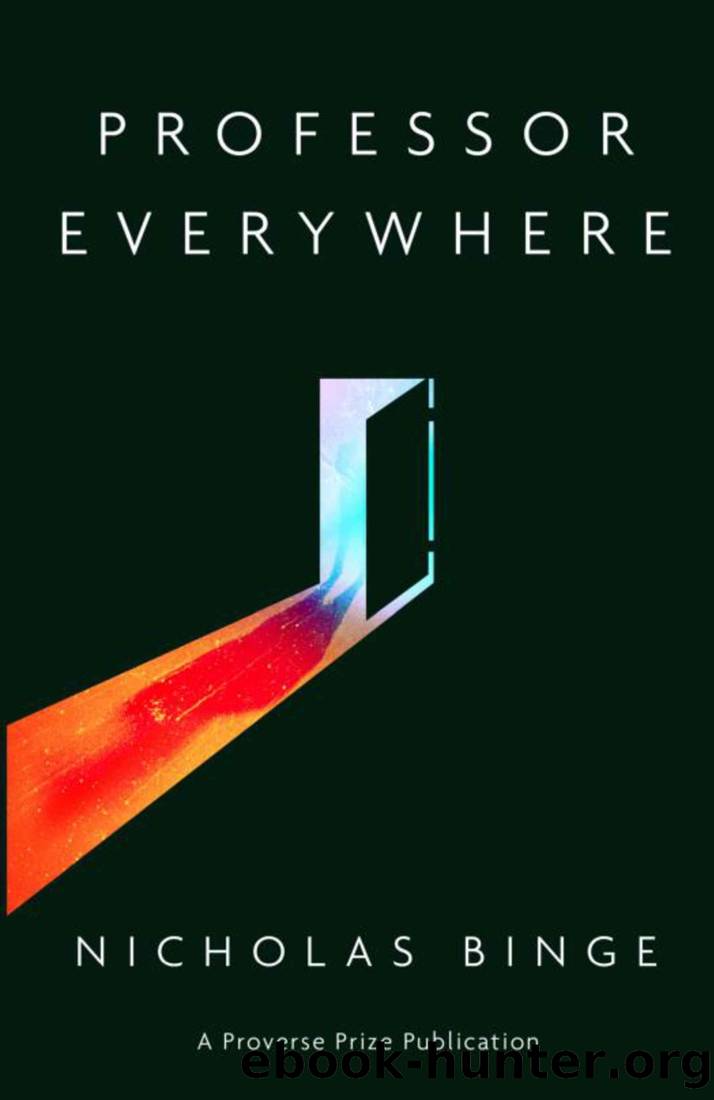
Author:Nicholas Binge [Binge, Nicholas]
Language: eng
Format: epub, azw3
Publisher: Proverse Hong Kong
Published: 2020-04-21T00:00:00+00:00
VIII
If there is one thing that the wealth of psychological experimentation throughout the twentieth century has shown us, it is that memory is not what it appears to be. Rather than an objective recalling of events, it is a constructive process, subject to the needs of the present.[86] Each time we call upon a memory, we reorganise and recategorise it to fit the fears, interests and emotions of the moment in which we are recalling it. Memories are not static, but alive, and like life they adapt to suit their environment.[87]
Indeed, while it might seem counterintuitive, the more a memory is accessed, the more we change it. The more we actively remember something, the more that memory distorts and evolves to fit who we are now. As such, it is our favourite memories, or perhaps our most traumatic, that are our least accurate.
I cannot even begin to recall my imprisonment in that terrible world with any degree of truth. It has been ten long years. And while I think it is important that I provide an account, I have no doubt that what I remember most clearly did not happen, and that what I experienced in that cell has gone from me.
But there is another source to which we can turn.
In the days after Pimlico, when the dust settled and the collective breath that the world had been holding was slowly released, people began to react. The world responded much as I had imagined it would: first chaos, then conspiracy, then finally rationalisation. The earth-shattering consequences of what Professor Crannus had done sequestered themselves into their respective realms: the scientific innovations were discussed primarily by scientists; the political implications by poly-sci undergraduates; the drama by the newspapers.
But these werenât the first through the door. The first were the artists.[88] As with all climactic events, there comes the deep-seated human desire to interpret and to represent. To distort the narrative into a new form.
But when I say distort, I do not mean it negatively. When Magritte famously presented a picture of a pipe with the subtitle âCeci nâest pas une pipeâ (this is not a pipe), he highlighted the great disquiet of the modern era: the relationship between truth and representation is shaky at best. We are forever confronted with what art historian Robert Hughes called the âslippage between image and object.â[89] Magritte knew, as all great artists do, that perfect replication of truth is impossible. Art does not and cannot strive for it, but must instead aim to recreate the essence of the fact, to somehow recapture the core underneath. To quote Alan Moore, âartists use lies to tell the truth.â[90]
In many ways, this is what Todd Warner did.
A film-maker of Warnerâs prestige requires no introduction, and you will undoubtedly have seen his more celebrated works. Whether in his haunting exploration of North Korean labour camps,[91] his bleak presentation of Antarctic wilderness,[92] or his tightly emotional portrait of the late Aretha Franklin,[93] he has always been known for his ability
Download
Professor Everywhere (Proverse Prize Publications) by Nicholas Binge.azw3
This site does not store any files on its server. We only index and link to content provided by other sites. Please contact the content providers to delete copyright contents if any and email us, we'll remove relevant links or contents immediately.
The Hating Game by Sally Thorne(19416)
Still Me by Jojo Moyes(11376)
Most of All You by Mia Sheridan(9546)
The Break by Marian Keyes(9412)
Where the Crawdads Sing by Delia Owens(8676)
The Kiss Quotient by Helen Hoang(7306)
Darker: Fifty Shades Darker as Told by Christian (Fifty Shades of Grey Series) by E L James(7275)
Little Fires Everywhere by Celeste Ng(7255)
Small Great Things by Jodi Picoult(7220)
Burn for You (Slow Burn Book 1) by J.T. Geissinger(7124)
Into the Water by Paula Hawkins(7021)
The Seven Husbands of Evelyn Hugo by Taylor Jenkins Reid(6746)
The Mistress Wife by Lynne Graham(6531)
Without Merit by Colleen Hoover(6096)
Beach Read by Emily Henry(5517)
Royally Screwed by Emma Chase(5332)
Eleanor Oliphant Is Completely Fine by Gail Honeyman(5323)
Elite Ops - 01 - Wild Card by Lora Leigh(5144)
Beloved (The Salvation Series Book 1) by Corinne Michaels(4737)
